SOCIAL MEDIA
Portuguese Medical Association's Scientific Journal

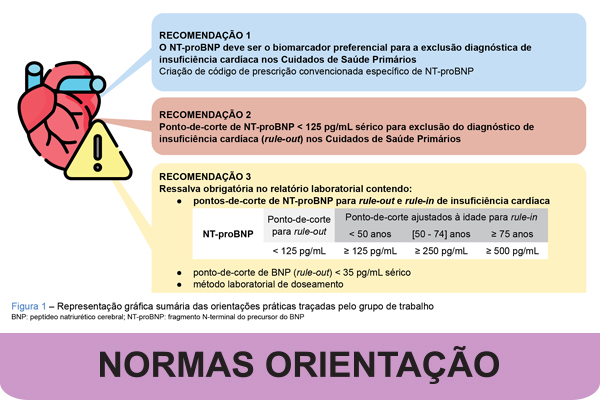
Heart failure (HF) remains a major clinical and public health challenge in Portugal, associated with high morbidity, mortality, and economic burden. Despite notable therapeutic advances, the degree of underdiagnosis in Portugal remains substantial, as evidenced by findings from the recent Portuguese Heart Failure Prevalence Observational Study (PORTHOS), which estimated that 90% of identified cases corresponded to new diagnoses. Early detection of HF in primary care (PC) is crucial for the implementation of cost-effective strategies capable of modifying the disease course. Natriuretic peptides, particularly NT-proBNP, have consistently demonstrated robust utility as a tool for ruling-out HF diagnosis and are recommended by leading international societies for outpatient use due to their reliability and analytical stability. In Portugal, however, several barriers hinder their systematic use in primary care, including the absence of specific NT proBNP coding within prescribing and laboratory reporting systems, as well as persistent uncertainty regarding appropriate reference values. To address these gaps, a multidisciplinary working group was convened, including representatives from Cardiology, Internal Medicine, and General Practice/Family Medicine, in collaboration with the Portuguese Society of Cardiology and its Heart Failure Working Group, the Heart Failure Study Group of the Portuguese Society of Internal Medicine, the Portuguese Association of Family Medicine, the National Association of Family Health Units, the National Association of Clinical Laboratories, and the Portuguese Association of Clinical Analysts. This document, resulting from a literature review and structured expert consensus, proposes three technical recommendations to foster the appropriate and standardized use of NT-proBNP in Portuguese PC: (1) the use of NT-proBNP as the preferred biomarker for HF diagnosis in primary care; (2) the adoption of NT-proBNP cut-off values for exclusion (rule-out) and confirmation (rule-in) of HF, in alignment with international recommendations; and (3) the implementation of specific reporting guidance for clinical laboratories. Furthermore, it calls upon national health authorities to effectively integrate NT-proBNP into the National Health System, thereby contributing to reducing HF underdiagnosis in Portugal and improving health outcomes.
Click here for the full paper (in Portuguese only)