SOCIAL MEDIA
Portuguese Medical Association's Scientific Journal

Introduction: Medical assistance provided in Portugal to patients from Portuguese-Speaking African Countries (PALOP) is regulated by political evacuation protocols, although many patients come by their own means (OM). The aim of this study was to characterize PALOP patients admitted to a Portuguese early childhood medical unit (ECMU), comparing those evacuated under official protocols with those who arrived by OM, and reflect on their medical complexity and associated challenges.
Methods: We conducted an observational study, with a retrospective chart review of all PALOP patients (<18 years old) admitted to an ECMU of a tertiary hospital in Lisbon, Portugal, between January 2018 and December 2022. Demographic and clinical data were extracted from patients’ medical records. Patients were grouped into evacuated patients (EP) and OM patients.
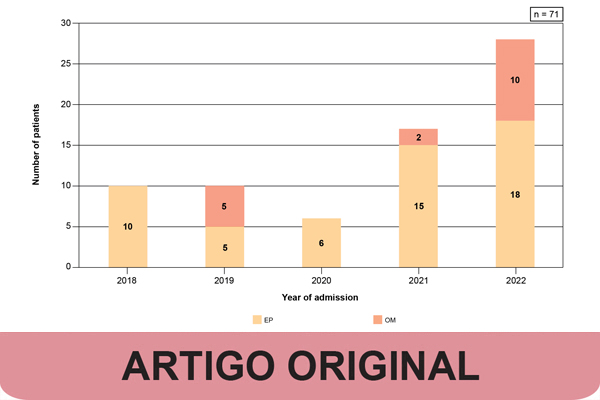
Results: A total of 71 patients were included, with 76.1% in the EP group and 23.9% in the OM group. Admissions increased throughout the study period, peaking in 2022. Most patients were male (62%), with a median age of 16 months. Own means patients were significantly older than EP patients (31 months vs 16 months, p = 0.026). Most EP patients originated from São Tomé and Príncipe and Cape Verde, whereas most OM patients came from Angola. The EP group had a higher prevalence of surgical, cardiac, and neurosurgical conditions, whereas the OM group showed a predominance of neurological and hematological diagnoses. Surgical intervention was required in 74.6% of cases, more frequent in EP patients (p = 0.008). Follow-up appointments were necessary for 95.8% of patients and 84.5% required social services support. The mortality rate was 84.5/1000, higher in the OM group (117.6/1000). Only 9.9% of patients returned to their country of origin.
Conclusion: Admissions of children from PALOP had an upward trend from 2018 to 2022, with most patients presenting complex comorbidities in both groups, and requiring highly specialized healthcare resources, prolonged hospitalizations, and readmissions. Mortality rate was considerable, and only a few returned to their country. These findings emphasize the need for improved coordination between countries to provide sustainable healthcare from both patient/families and healthcare system perspectives.